
Additional information
| Therapeutic Segment | Anti-Emetics |
|---|---|
| Dosage Form | Tablets |
| Specialities | Cardiologist, ENT, G.P., Gastroenterologist, Gynecologist, Nephrologist, Paediatrician, Physician, Surgeons, Urologist |
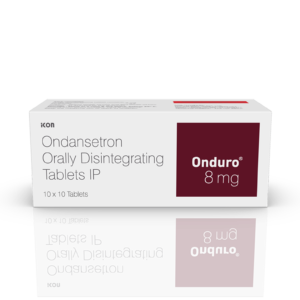
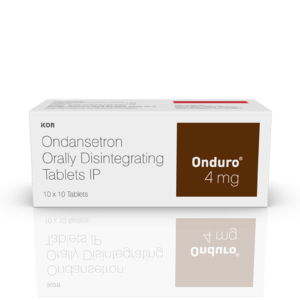
Ondansetron 4 mg ODT is an antiemetic tablet used to prevent and treat nausea and vomiting associated with chemotherapy, radiotherapy, and postoperative conditions. The orally disintegrating formulation dissolves quickly on the tongue, making it convenient for patients who have difficulty swallowing tablets or are experiencing vomiting.
- Provides effective relief from nausea and vomiting
- Suitable for chemotherapy, radiotherapy, and postoperative patients
- Orally disintegrating form allows quick dissolution without water
- Fast-acting, helping prevent nausea before it starts
- Improves patient compliance, especially in those with swallowing difficulties
Take this medicine in the dose and duration as advised by your doctor. Place the tablet on the tongue; it dissolves rapidly and can be swallowed with saliva. Can be taken with or without food.
Ondansetron is a selective 5-HT3 serotonin-receptor antagonist used for its antiemetic properties. It is one of the four FDA-approved 5-HT3 serotonin-receptor antagonists used to combat nausea and vomiting, including granisetron, dolasetron, and the second-generation drug, palonosetron. Ondansetron acts both centrally and peripherally to prevent and treat nausea and vomiting. Central effects are mediated by the antagonism of 5HT-3 serotonin receptors in the area postrema. The area postrema, located on the fourth ventricle floor, contains the "chemoreceptor trigger zone." This zone senses neurotransmitters like serotonin, toxins, and other signals and plays a role in mediating the sensation of nausea and subsequent vomiting. Ondansetron also has effects peripherally by acting on the vagus nerve. It works on the 5-HT3 receptors that can be found at the vagus nerve terminals. The vagus nerve can sense nausea and vomiting triggers within the GI tract, such as stomach irritants. It forms synapses within the nucleus tractus solitarius of the brainstem, another region important in vomiting. The peripheral actions of ondansetron are thought to be the predominant mechanism for its antiemetic effects.
As directed by physician